


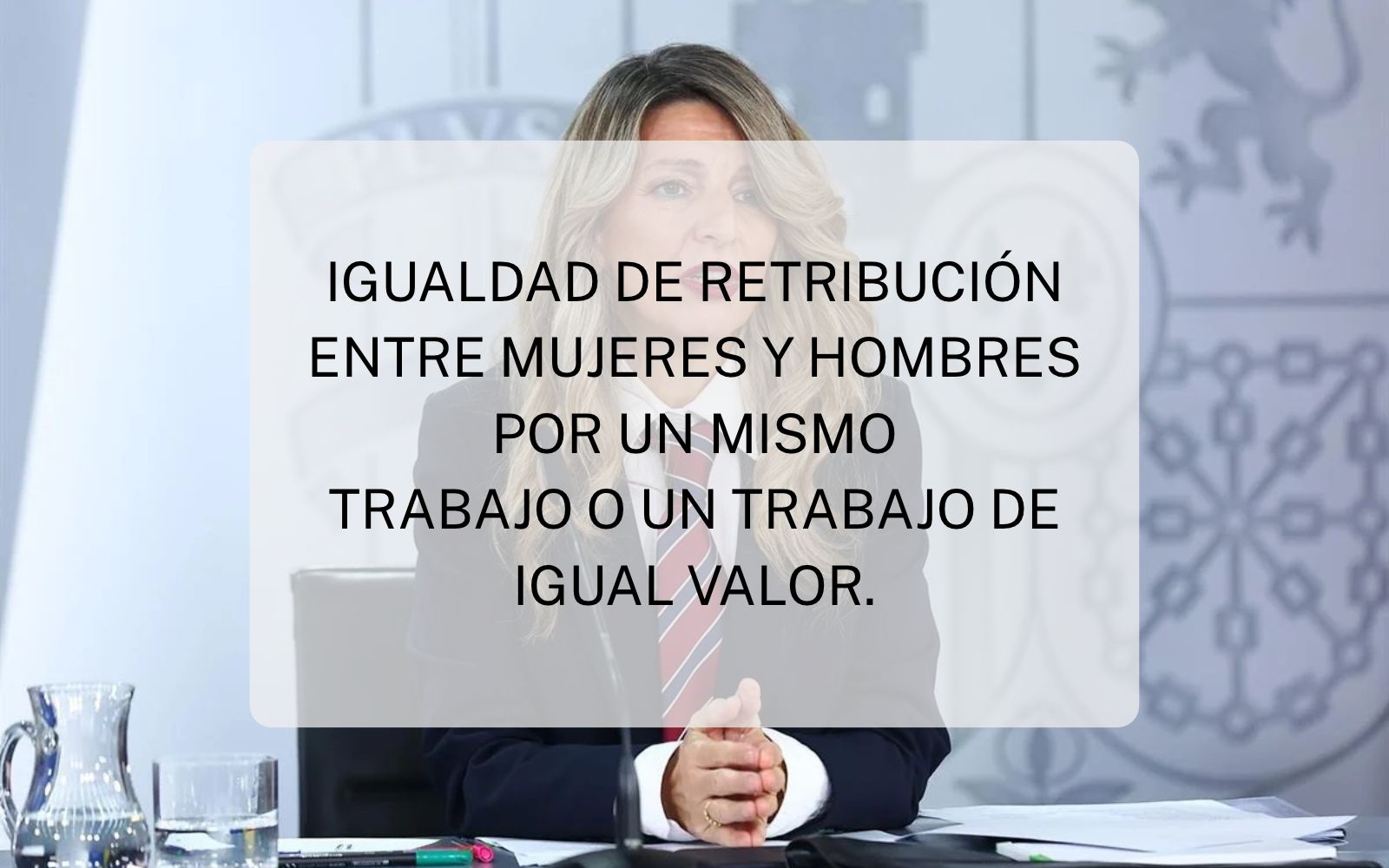
The Royal Decree-Law 39/2026 of 17 November, was published in the Official State Gazette (BOE) on 18 November 2026. The regulation amends the Workers’ Statute and other labour regulations to strengthen the equal pay for women and men and the transparency regarding working conditions.
What is the purpose of Royal Decree-Law 39/2026?
This Royal Decree-Law completes the transposition into Spanish law of the provisions of two European directives:
- EU Directive 2019/1152 on transparent and predictable working conditions in the European Union.
- EU Directive 2023/970 on equal pay for women and men for the same work or work of equal value.
It has three objectives:
- Let labour relations be more predictable.
- That workers should receive more information about their working conditions.
- That the principle of equal pay is effectively enforced.
Which regulations does it amend?
Royal Decree-Law 39/2026 amends these regulations:
- Workers’ Statute (Royal Legislative Decree 2/2015 of 23 October).
- Royal Decree 902/2020, of 13 October, on equal pay for women and men.
- Act 3/2023, of 28 February, on Employment.
- Royal Decree 723/2026, of 9 September, on transparent and predictable working conditions.
- Law on Offences and Penalties in the Social Sphere (SMOOTH).
- Public Sector Contracts Act.
When does it come into force?
The standard has been in force since 19 November 2026, in accordance with its seventh final provision. Some obligations have transition periods:
- Transitional periods to adapt certain equal pay instruments.
- Staggered timetable to comply with the new salary reporting obligations.
Comparison table of the main amendments
You can find out about the main changes introduced by Royal Decree-Law 39/2026.